
All Calculations To The Contrary
I teach breathwork.

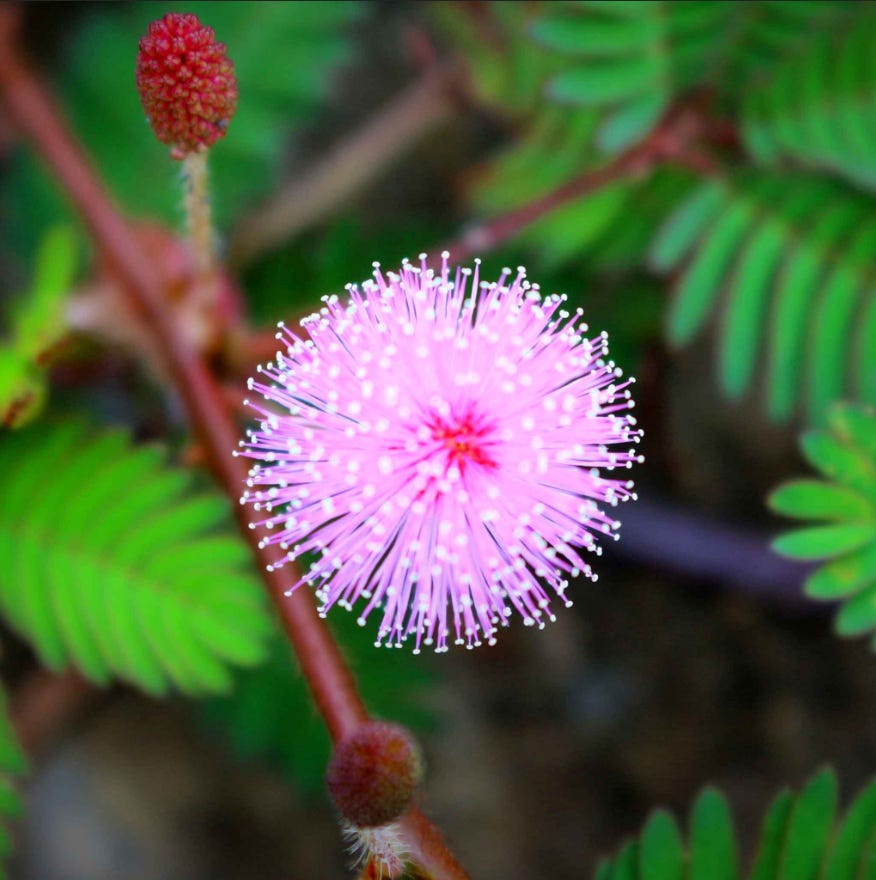
I walked outside early in the morning, Ras Tower, who cuts the lawn hadn’t been there for a few weeks. Tower, in addition to cutting our grass, runs an internet radio station and works for the Ministry of Forestry. Ras Tower had given Ti Marie enough time to grow through the lawn, and there was this riot of fuchsia flowers, and honeybees were going about their business, collecting pollen, moving from flower to flower.
I just stood there looking for quite some time.
In another life, I don’t know that I would have seen it or had time or been even minded to marvel at what I was seeing. I hope so, but I don’t think so.
The World I Came From
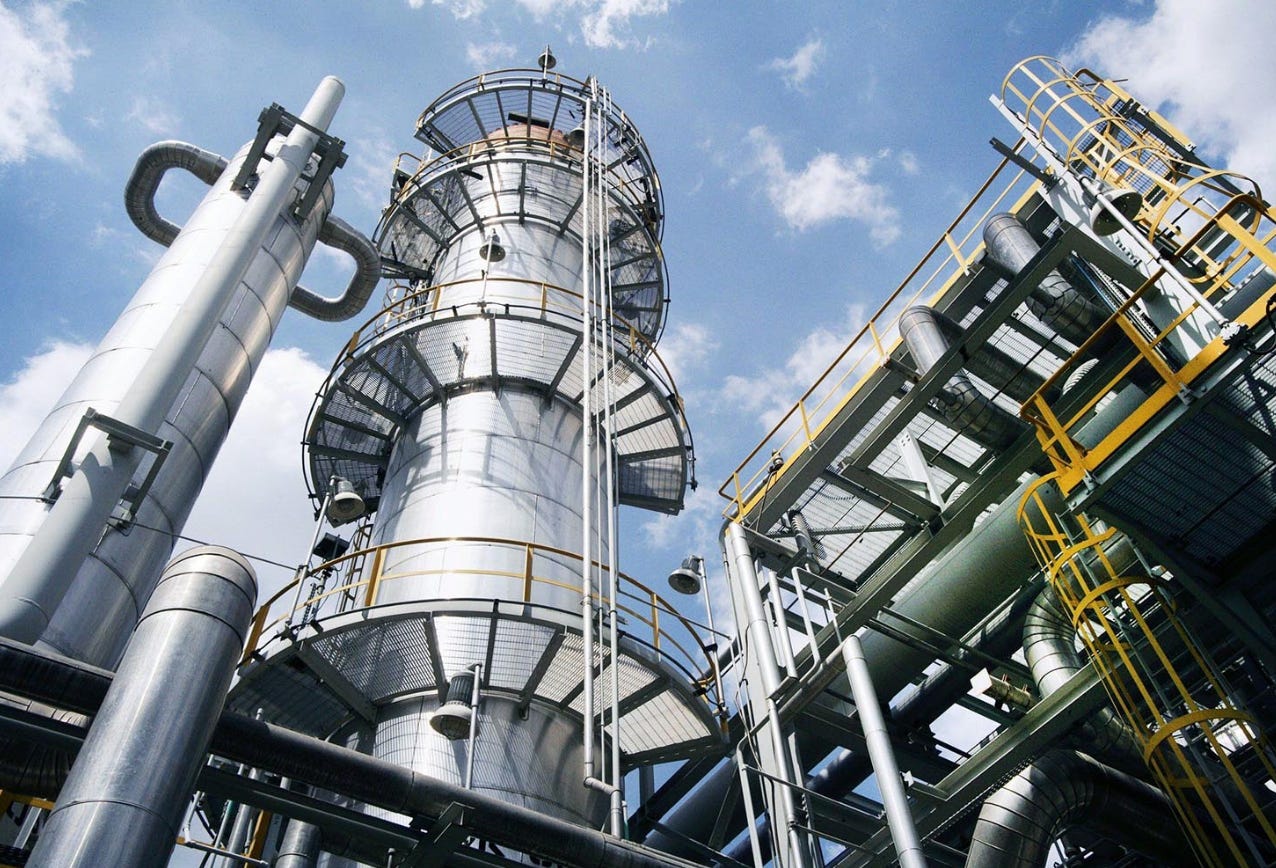
For a little less than two decades, I was a process operator. A process operator is not an engineer. Engineers design plants and do calculations, and show them to operators, tell them why they should work, and then process operators nod and go to the plant and actually run it, sometimes in spite of what the engineers have calculated.
If the ammonia plant I was on was the Starship Enterprise, the engineers were probably somewhere at home in Starfleet. Chekov was on the control panel and Scotty was in the engine room trying to get them dilithium crystals to give them more. Yes, I’m a Trekkie.
People ask me why I don’t do that anymore, and the short answer is I wanted to live. Two of the men that I started working with, actually three of the men that I started working with, are no longer alive. Out of a bunch of 20 trainees that started what was then the world’s largest single-train ammonia plant, two of us have died, and one who was our senior has also passed away.
It’s quite a strange thing to do something really hard with a group of people to whom the only connection you have is doing that really hard thing. There’s a possibility of real friction, and there’s also the opportunity for bonding in a way that I’ve only really otherwise seen in the military and in touring music groups. There’s something about doing something that is only just barely possible that brings you together.
Not to say that there aren’t challenges.
I was the first woman to be a process operator. Not a plan. I saw the application in the newspaper, I was reading in the College library when I should have been doing Chemistry homework.
When Systems Fail (And People, People)
Years in, I had an incident that changed the way that I worked. Afterward, I didn’t have the kind of wide-eyed innocence, the ability to assume that people were simply there to work, which I had largely maintained up to then. It really was a very, very challenging time for me. I did not want to be at work. It was a hard, hard time because I saw a system actively working to suppress the truth.
Forget sweep under the rug. Somebody tried to dig a hole and bury that.
Six Weeks, Two Crews, One Handshake
Years later, in a plant shutdown turnaround, I was lead on valve repair - 120 control valves to repair across the plant. Much coordination required.
I had two crews of contractors, a 12-man crew and a 13-man crew and two cranes - one a nine-tonne. The 13-man crew was late every day because it was 12 rastas and a ball head, and Safety used to pull up on the rastas every morning. “We getting drug tested every morning, Ras.” “We getting drug tested. We reaching to work on time, but we can’t come and meet you until after.”
Before we started working, I asked the little fellow I had history with to step aside. He had to have a special fall harness ordered because he was under the 125lb weight that a typical harness needed to work. Dude could have fallen off a ladder and not had enough mass for a harness to deploy. “Listen, I said, we have to work together, and this job is going to require us doing just that. If we don’t work together, this is not going to get done.”
He said, “Yeah.” I said, “Let’s shake on it.”
We did. We shook hands and walked out of the control room. For the next six weeks, from 6 am to 9 pm most days, every single day, we worked on that project.
One morning, we had a butterfly check valve to remove. The lines in that system were full of potassium carbonate. Nasty corrosive stuff. We had to empty the line. He had to disconnect the electrical and force it shut to get it out of the line. Like sliding a plate out of the dishrack, except this thing was 18 inches wide, solid disc of stainless steel with an outer ring and spindle and control head, two stories up. We needed the nine-tonne crane.
That valve was out on the ground by 9 am, and people were shocked.
Why I Teach Breathing Now
Why leave all that fun? Why am I no longer a process operator?
I went to study languages. Another encounter with a newly minted engineer convinced me I should probably go get a degree, so as one does, I went and did something that seemed interesting and not troublesome, a new degree option called Speech and Language Science. I had no intention of falling deeply in love with linguistics (I didn’t realise it was a linguistics degree), but I did.
Language is more complex and our ability to make language is way more complex and fundamental than making ammonia. Languages are more fun and way less stinky than Benfield. A thing we humans seem compelled to do, and a way, way more complex process than an ammonia plant.
And breathing is first, final, and fundamental.
My first practice was called Radical Breathing. Radical as in from the root. I started when the world was afraid of sharing breath, and five years later this is still a time of so much foment. The uncertainty has been exhausting and time feels both like a blur and an eternity.
I don’t teach from the point of view of someone who has ever had an office job. I teach from understanding what critical systems are. I know what it means to operate critical systems. What happens when systems fail.
What I intend for my clients is the ability and capacity to regulate.
That might not be you outside observing honeybees about their business in the very early morning...watching workers forage through a riot of fuchsia flowers. I wish for you, whatever your it is……able to be in the moment and notice…
Alyssa is a breathwork facilitator who spent 17.5 years as a process operator on the world’s largest single-train ammonia plant. She now teaches breathing as the most critical system we’ll ever operate. We are only breathing. Let’s breathe like our lives depend on it.